
Burton Morris
36″ × 48″
Silkscreen, Spray Paint, and Acrylic on Canvas
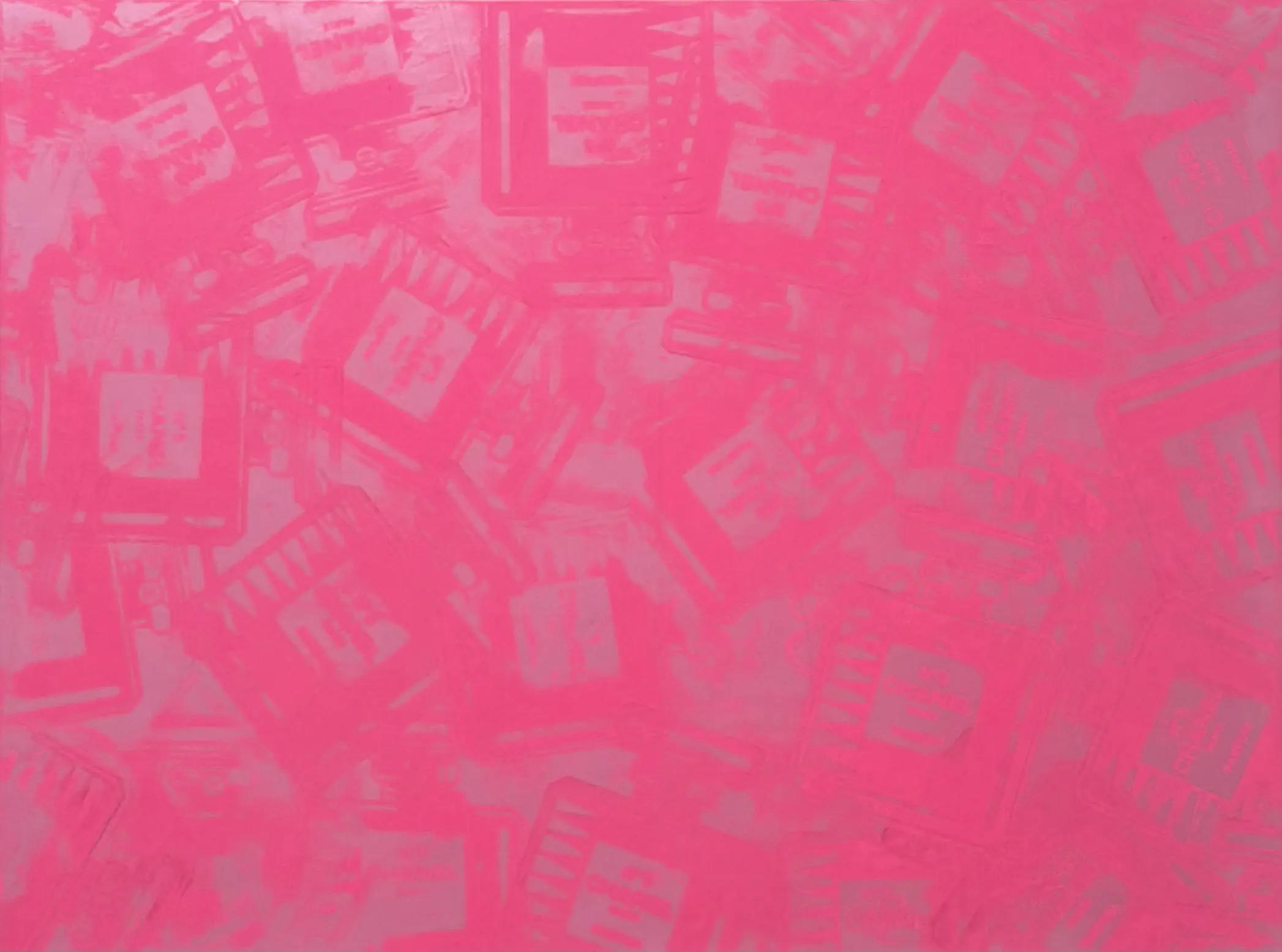
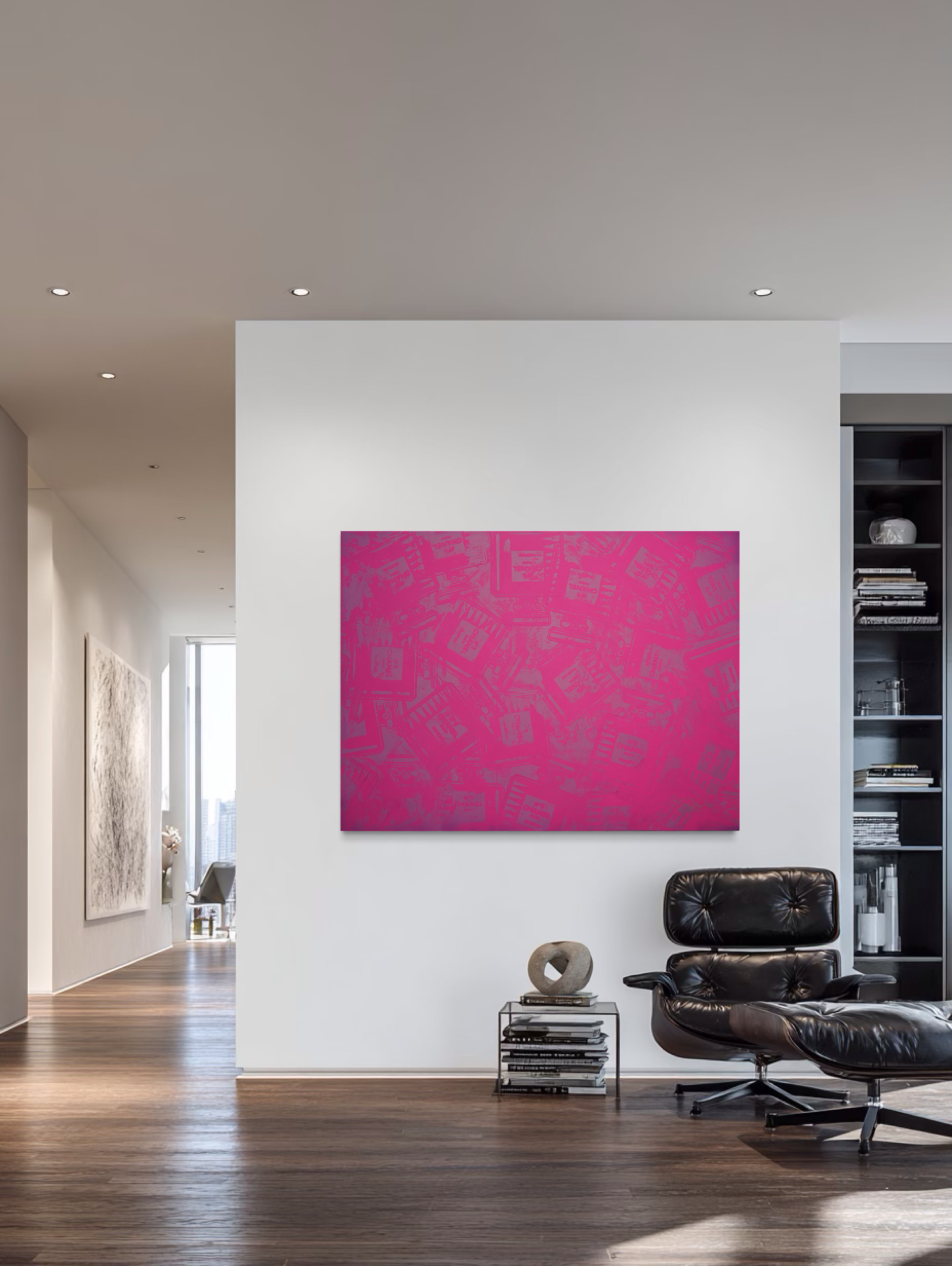
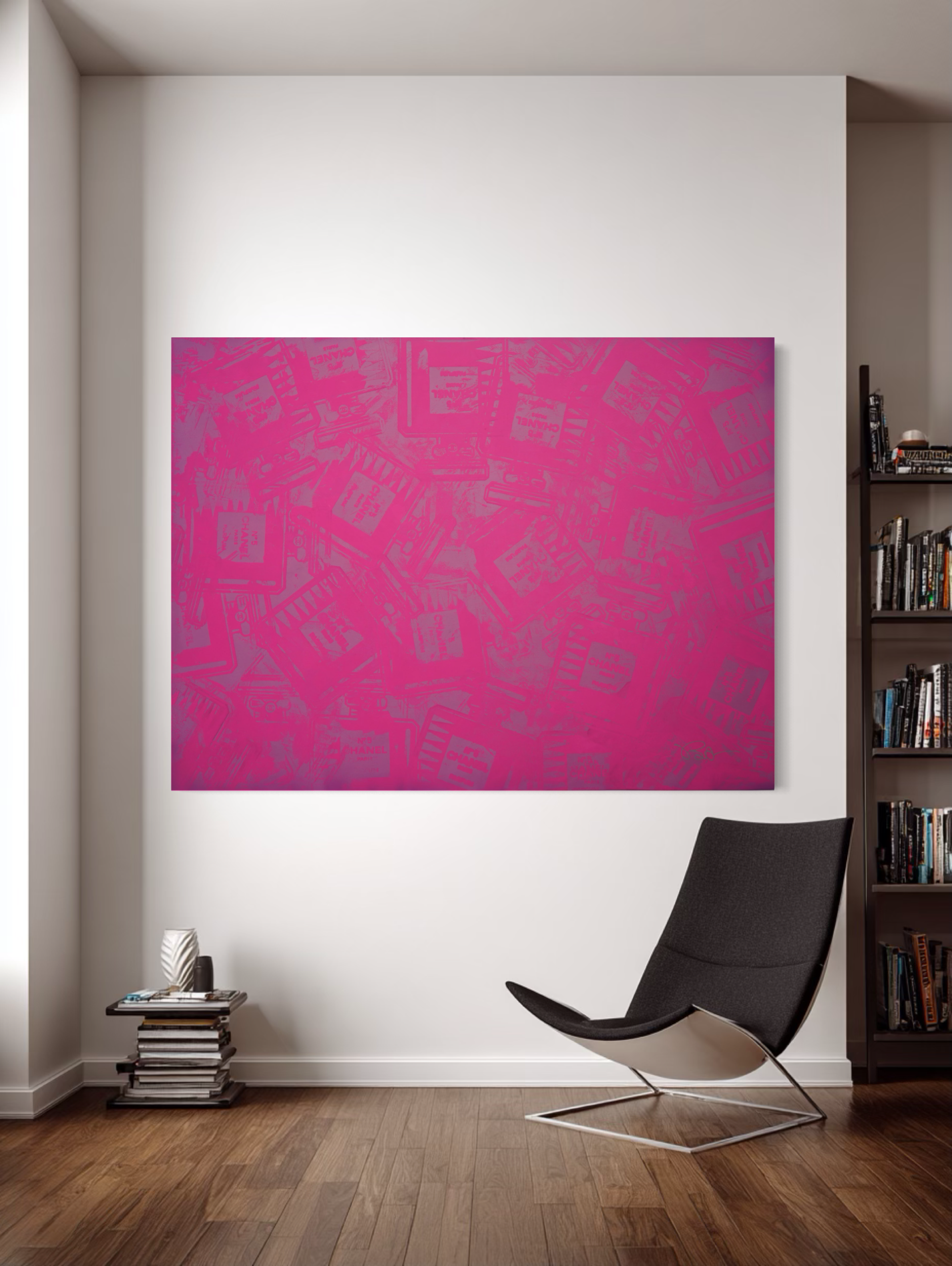
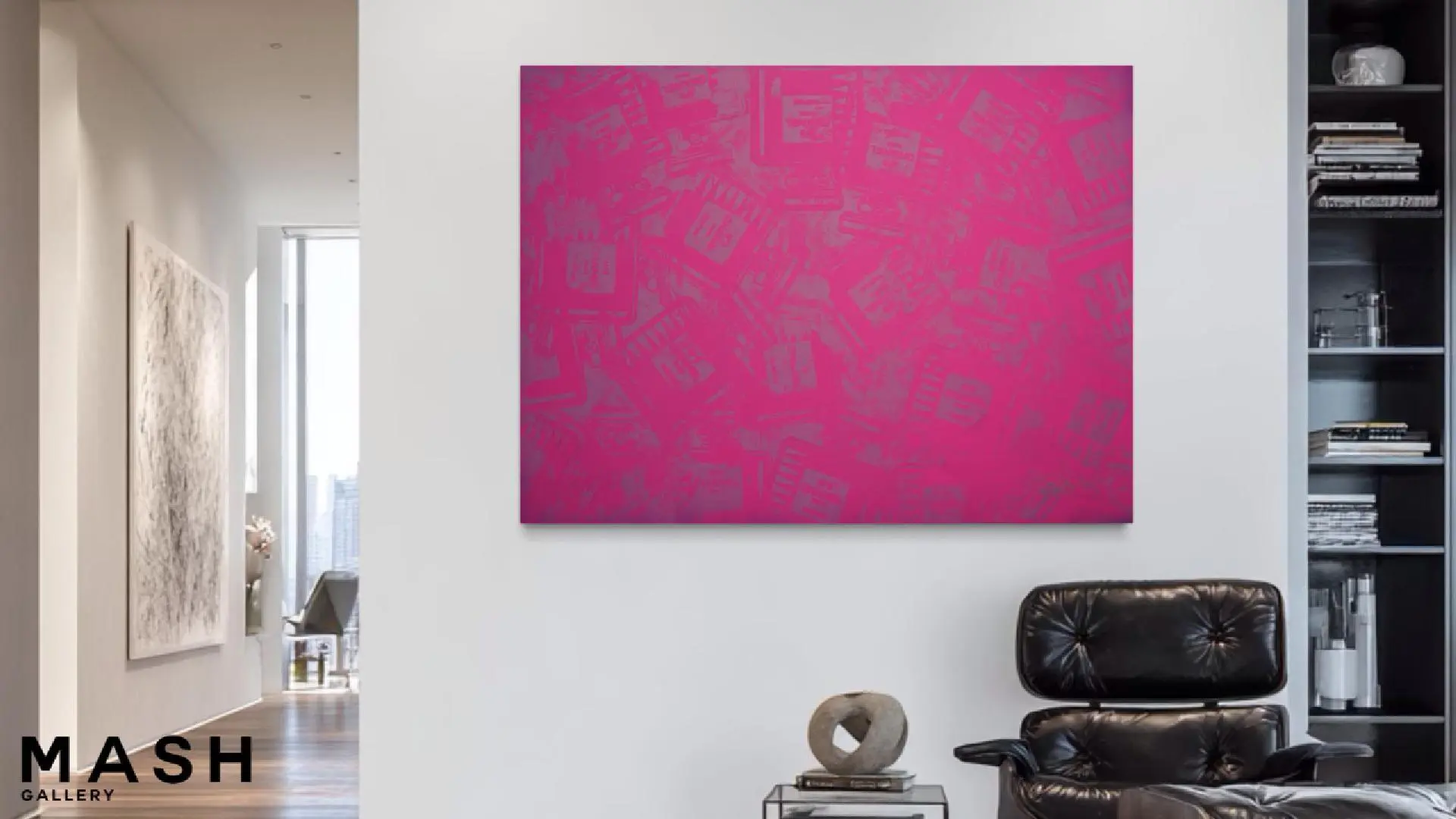
Amas de Chanel (Rose) is a dramatic and atmospheric work from Burton Morris’ Chanel No. 5 Series, presented in his solo exhibition Icons in Bloom at MASH Gallery in West Hollywood. The canvas unfolds as a dense field of overlapping Chanel No. 5 perfume bottles, layered through silkscreen, spray paint, and acrylic paint. Emerging from a pink field, the iconic bottle appears multiplied and partially obscured, transforming the symbol of luxury into an immersive surface.
Throughout his earlier contemporary pop art works, Morris became widely recognized for crisp outlines, bold color contrasts, and instantly legible imagery connected to entertainment, sports, and popular culture. Those compositions reflected the legacy of Pop Art pioneers such as Andy Warhol and Roy Lichtenstein, whose works embraced the visual language of advertising and mass media. In Amas de Chanel (Rose), Morris expands beyond that graphic clarity. Rather than isolating the icon, he submerges it within layers of repetition and tonal depth.
The Chanel No. 5 bottle is approached not simply as branding but as a historical cultural form. Since its creation in 1921, the bottle’s minimalist design has embodied modern luxury, echoing the elegance of Coco Chanel herself. Morris draws upon this lineage while transforming the bottle into a contemporary visual structure. Influenced by the history of the perfume bottle, the work treats luxury as both aesthetic object and symbolic architecture.
In this monochromatic composition, the repetition of the bottle recalls Warhol’s serial logic while the layered surface evokes the material experimentation of artists like Robert Rauschenberg. Yet Morris’ distinctive graphic vocabulary anchors the image within contemporary pop art painting. The result is a powerful evolution of Morris’ practice, one in which the pop icon becomes immersive, atmospheric, and materially complex.
By merging silkscreen, abstraction, and luxury symbolism, Amas de Chanel (Rose) expands the language of Pop Art. The work reframes the perfume bottle as a cultural artifact, bridging fashion history, contemporary art, and the evolving dialogue between commerce and aesthetic permanence.