Rod Lathim
16” x 10” x 50”
Repurposed Cello, Neon, Vintage Metal Ring Base
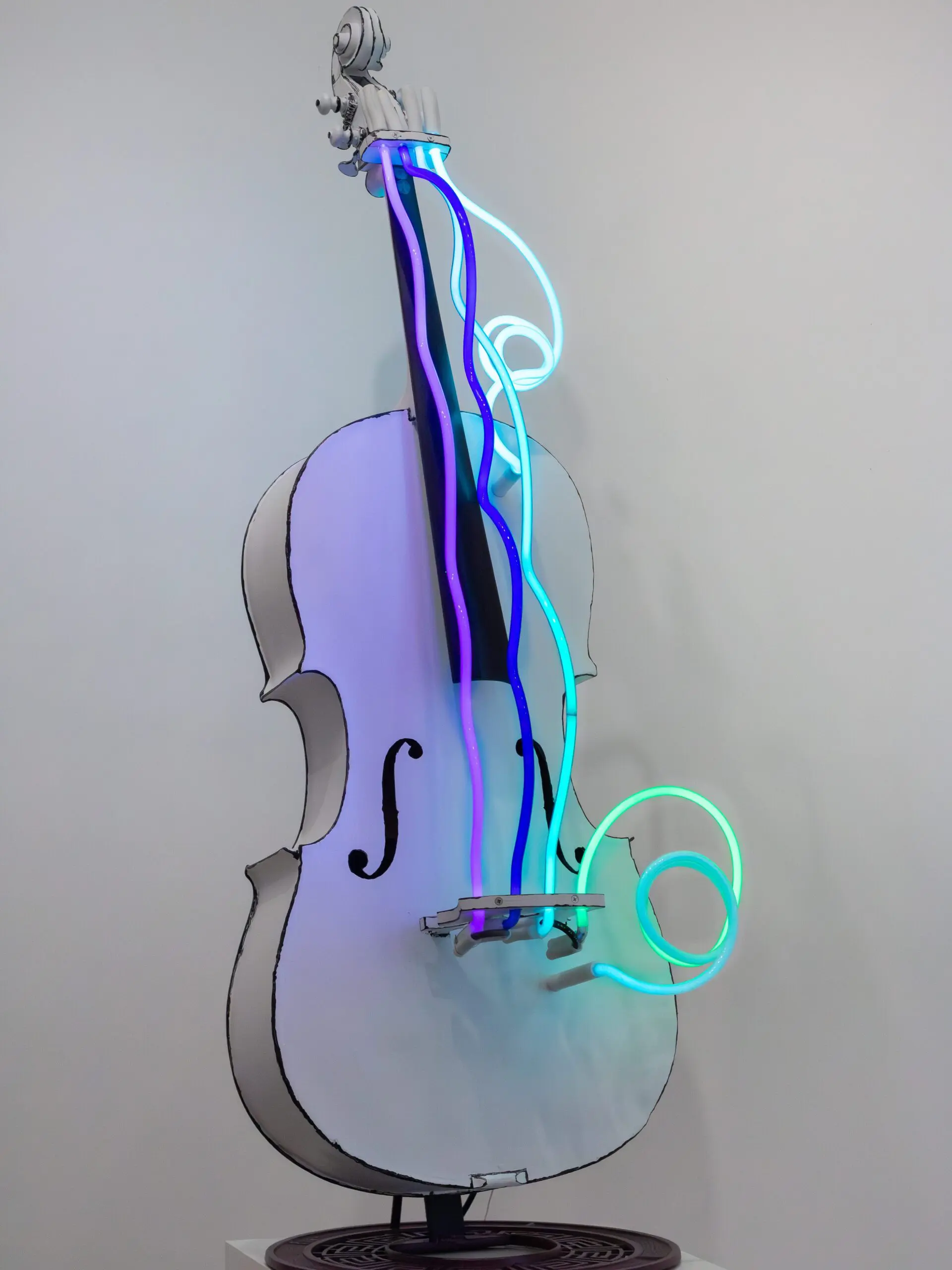
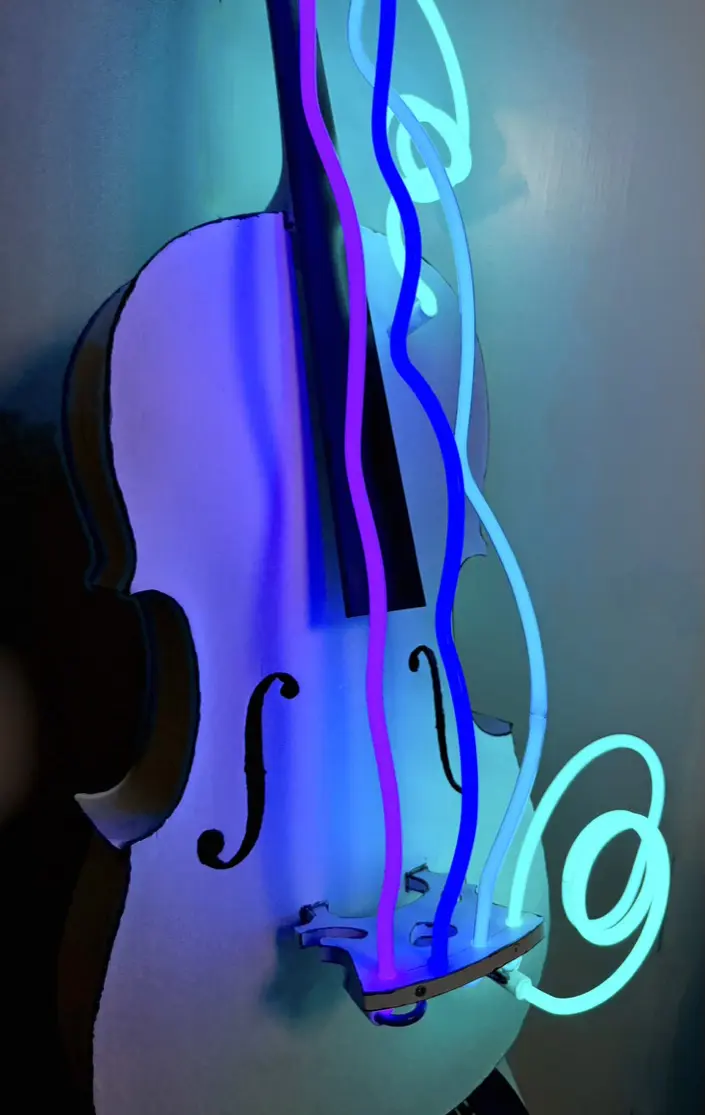
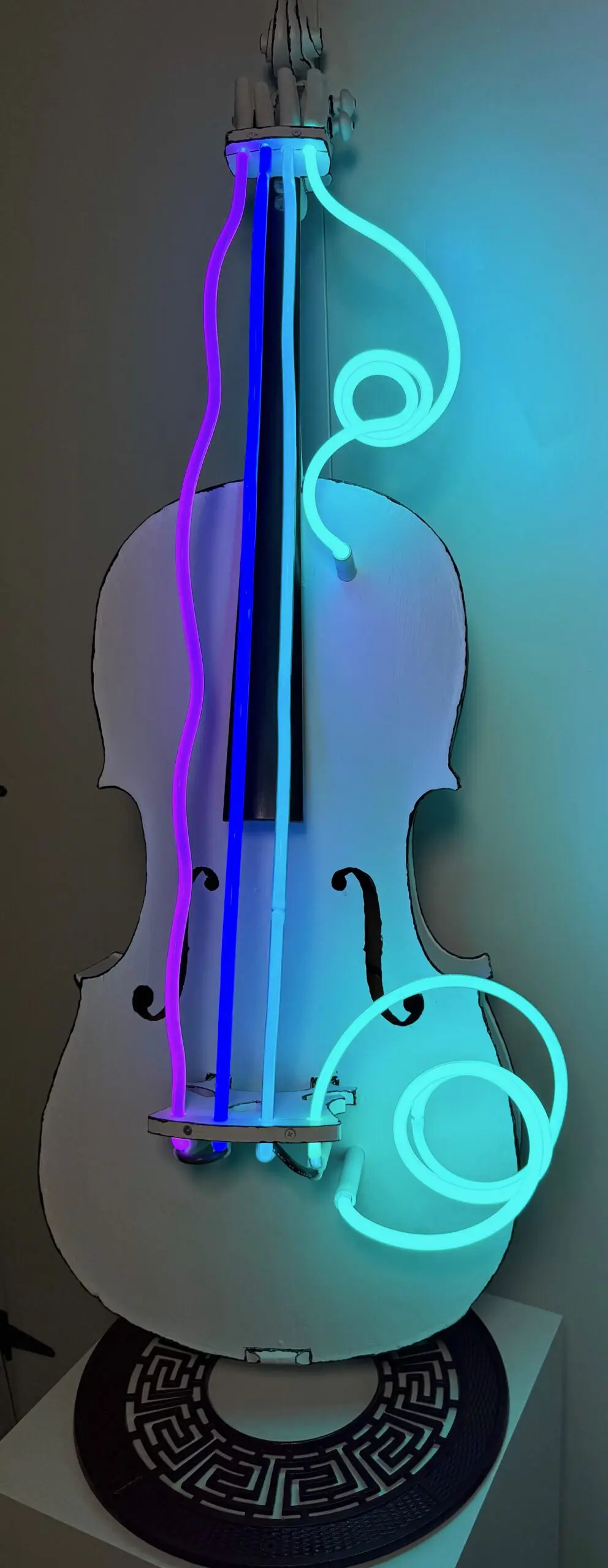
Rod Lathim’s Cantabile transforms a repurposed cello into a radiant sculpture where light and music converge. Painted in luminous white with edges subtly traced in black, the instrument becomes a vessel of quiet purity, holding the moment just before sound emerges.
In Italian, cantabile (pronounced kahn-TAH-bee-lay) literally means “singable” or “in a singing style.” In musical notation, it’s used as a performance direction — telling the musician to play lyrically, smoothly, and with expressive grace, as though the instrument itself were singing. Lathim translates that direction into visual form, allowing neon to become a new kind of lyrical line. Three glowing glass “strings” flow in gentle waves, frozen mid-vibration, their shifting hues suggesting the emotional resonance of melody made visible. A fourth, broken string curls into a luminous spiral, creating a tender acknowledgement of imperfection. The sculpture rests atop a vintage metal ring engraved with intricate Asian motifs, grounding the composition while elevating the cello into a state of near-suspension. Cantabile captures the grace of motion, the devotion of artistry, and the invisible breath that animates all music.
Cantabile draws on art-historical and cross-disciplinary traditions of artists who merge object and illumination, connecting to the experimental light works of Dan Flavin, the repurposed-instrument sculptures of Arman, and the poetic material transformations found in the Arte Povera movement. Yet Lathim’s approach is distinctly personal. His background in music therapy and theatre informs the piece, allowing it to resonate on emotional, symbolic, and physical levels.
Within Mash Gallery’s Rhythmic Contours, Cantabile becomes a cornerstone of the exhibition, which examines how artists reinterpret rhythm, line, and movement across materials. Lathim’s sculpture embodies rhythm as light traced across a familiar form. Cantabile stands as both an illuminated object and a meditative invitation, embodying Lathim’s belief in art as a source of healing, transcendence, and joy.