Ron Reihel
22″ x 22″
Mixed Media & Optical Urethane
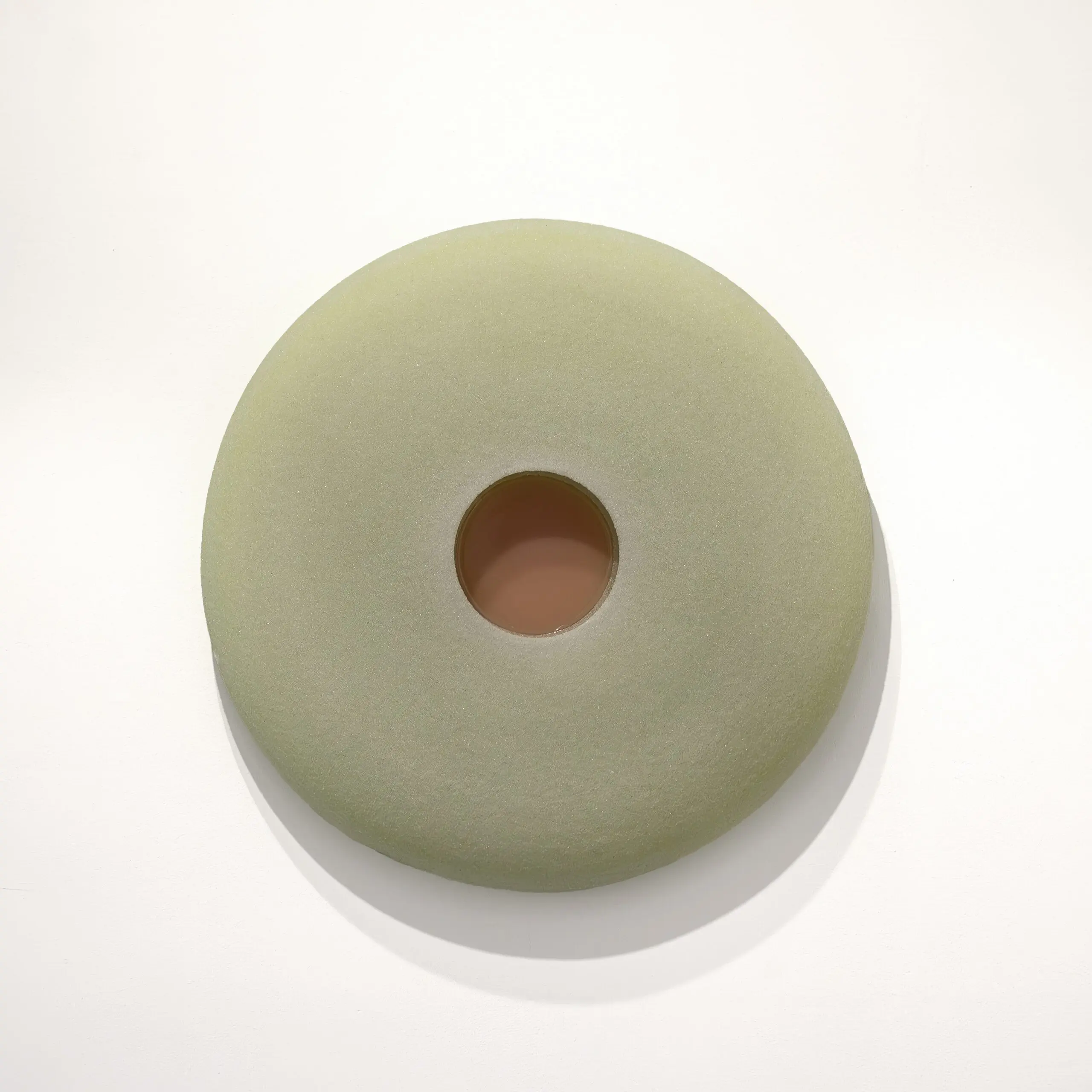
In Sun Moon, Ron Reihel distills form, process, and symbolism into a sculptural painting rooted in natural cycles and quiet resilience. Inspired by the winter-blooming camellia, which flowers during colder and dormant months, the piece reflects themes of endurance, renewal, and propagation. Rather than depicting the flower directly, Reihel abstracts its life cycle into a refined circular form that references both botanical growth and celestial movement.
The sculpture begins with a base mold that establishes its essential geometry. Reihel then hand-sculpts the piece, introducing subtle variations that give the work an organic presence. This balance between repetition and individuality mirrors the natural process of propagation, where growth occurs through duplication yet never results in exact sameness. Cast in optical urethane, the surface holds a soft, diffused luminosity that absorbs ambient light throughout the day. In darkness, the artwork glows, extending the sculpture’s presence beyond daylight and reinforcing its connection to cyclical time and transformation.
Sun Moon aligns with traditions of Minimalism and the Light and Space movement, recalling the perceptual sensitivity of artists such as James Turrell, while also resonating with the quiet restraint of Agnes Martin and the symbolic clarity of mandala forms in Eastern art. The relationship between the outer disc and inner core suggests balance between opposing yet interdependent forces such as rest and growth, concealment and emergence, winter and bloom.
Presented as part of Mash Gallery’s group exhibition Rhythmic Contours, Sun Moon expands the exhibition’s investigation of rhythm into the realm of natural cycles and material process. Here, rhythm unfolds through seasonal repetition, propagation, and return.
Sun Moon offers collectors, interior designers, and architects a sculptural work that merges material innovation with conceptual depth. Its glow-in-the-dark quality, refined craftsmanship, and botanical origins position it as both a meditative object and a quietly resonant presence within modern interiors.