The Evolving Role of Galleries as Cultural Educators, Not Just Exhibitors
Art galleries are seen as places to view, purchase, or contemplate artwork. But in today’s cultural landscape—marked by global connectivity, digital access, and a renewed desire for meaningful experiences—the role of galleries is shifting dramatically. No longer just exhibitors, galleries are becoming cultural educators, shaping public understanding of contemporary art and fostering deeper engagement within their communities.
This evolution reflects a broader truth: audiences don’t just want to see art—they want to understand it.
From White Cube to Learning Environment
The traditional “white cube” gallery model prioritized visual neutrality and quiet contemplation. Today’s galleries are increasingly reimagining their spaces as centers of learning, dialogue, and discovery.
This shift is driven by:
Visitors seeking more context and connection, not just aesthetics
Growing expectations for transparency in the art world
The desire to support artists beyond simple representation
A need for meaningful cultural engagement in a fast-moving digital era
Galleries now act as interpreters, guiding audiences through the ideas, histories, and social conversations embedded in contemporary art.
Educational Programming as Core Mission
Educational programming used to be associated primarily with museums. Now, galleries are embracing it as a core part of their identity.
Contemporary educational initiatives include:
Artist talks and studio conversations that demystify the creative process
Workshops and hands-on sessions for collectors, students, and community members
Curatorial walkthroughs that reveal the themes and research behind an exhibition
Online educational content, from essays and podcasts to virtual tours
Collaborations with schools, universities, and nonprofits
These efforts reflect a commitment to empowering audiences with knowledge—not as an add-on, but as an essential offering.
Galleries as Community Cultural Hubs
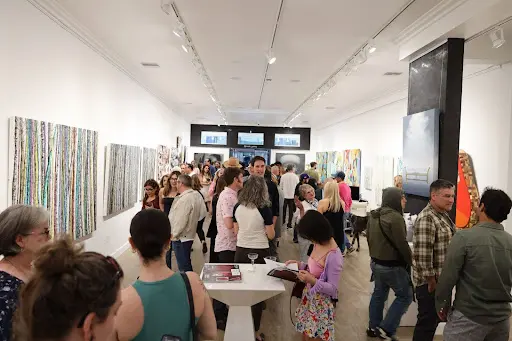
The gallery of today isn’t just a commercial space; it’s a cultural hub. By hosting conversations, performances, screenings, and interdisciplinary programs, galleries cultivate community around contemporary art.
In rethinking their role, galleries help audiences see art as part of everyday cultural life—not an exclusive domain.
Why This Evolution Matters
As quick-scroll consumption and image saturation engulfs our days, galleries play a crucial role in slowing down the experience. Their shift toward cultural education ensures that contemporary art remains relevant, understood, and appreciated by a wide range of audiences.
By becoming educators, galleries support deeper engagement with art and artists. Create more inclusive and accessible cultural spaces. Strengthen the connection between communities and creativity. And foster critical thinking and dialogue in an increasingly fragmented world
Ultimately, the gallery’s evolving identity isn’t just about staying relevant—it’s about reshaping how society interacts with art.
Join us as we continue to expand the role of the gallery as a place of learning and connection. Visit Mash Gallery in West Hollywood or explore online.
Visit Mash Gallery 812 N. La Cienega Blvd Los Angeles, CA 90069 www.mashgallery.com
Stay up to date with our latest news, events, and exhibitions!
We will process the personal data you have supplied to communicate with you in accordance with our Privacy Policy. You can unsubscribe or change your preferences at any time by clicking the link in our emails.
Inquire about the artwork
Please fill out the form and we will check the availability of the artwork for you