Why Burton Morris’ Return to Los Angeles Matters in the Evolution of Contemporary Pop Art
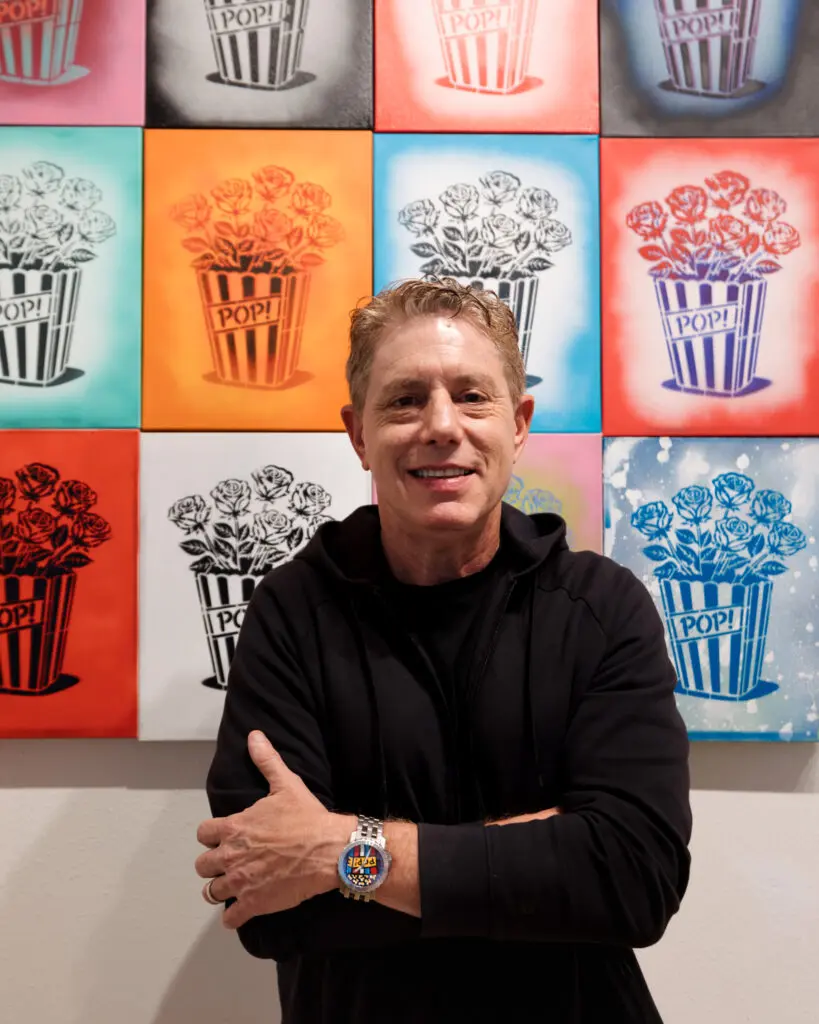
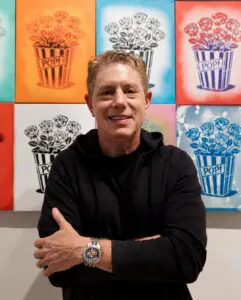
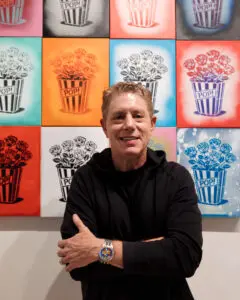
Burton Morris in front of his Pop! Roses series
When Burton Morris returns to Los Angeles with Icons in Bloom at MASH Gallery, it is not simply a comeback. It marks a meaningful moment in the trajectory of Contemporary Pop Art. His return signals a shift in how Pop Art functions in 2026 and how it is understood within the cultural landscape of Los Angeles. As a curator, I am not interested in staging nostalgia. I am interested in identifying inflection points. This exhibition represents one. It positions Pop Art not as a historical style to be repeated, but as an evolving language that responds to culture and technology.
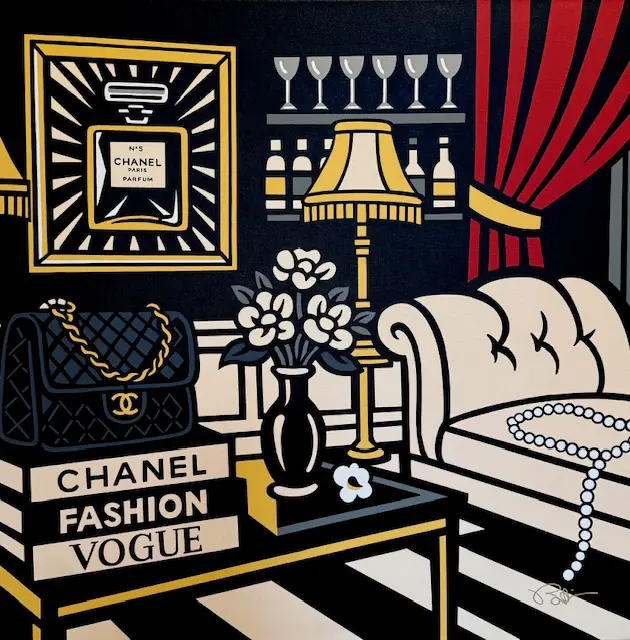
Salon de Minuit by Burton Morris
Pop Art Beyond Irony
Pop Art historically emerged as commentary. Artists such as Andy Warhol transformed consumer products into icons, collapsing the boundary between advertising and fine art. Roy Lichtenstein reframed comic strip imagery as high art, exposing the mechanics of reproduction and perception. Keith Haring used bold graphic language to address urgent social realities. In each case, irony, detachment, or critique played a role. Pop Art carried tension. It seduced the viewer while simultaneously examining the structures of mass culture.
Burton Morris’ early work aligned clearly with that lineage. His strong black outlines, flattened forms, and recognizable American iconography positioned him within the extended history of Pop. The work was confident, graphic, and immediately legible. It embraced clarity and impact.
However, Icons in Bloom reveals an evolution. This new body of work does not rely on irony alone. It introduces romanticism. It introduces a heightened sensitivity to the surface. It introduces an emotional tone. The paintings still retain the boldness that defines Morris’ visual language, yet they move beyond commentary. They participate in culture rather than standing apart from it.
This shift is significant within the broader evolution of Contemporary Pop Art.
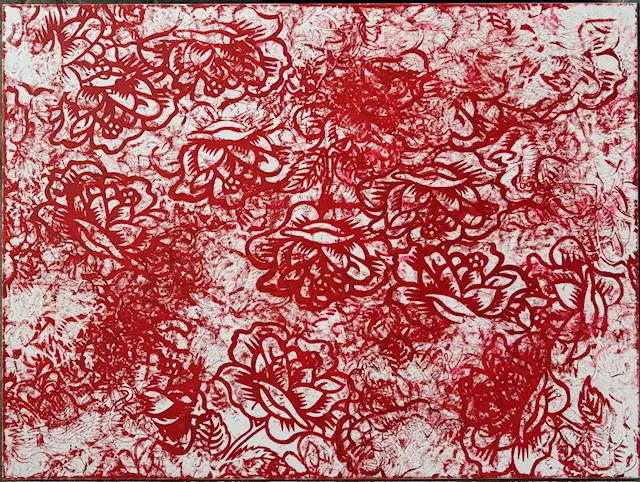
La Vie en Rose by Burton Morris
The Post Digital Condition
Pop Art originally responded to a world shaped by television, advertising, and mechanical reproduction. Today we inhabit a fully digitized visual environment. Images circulate instantly. Reproduction is effortless. Artificial intelligence can generate visual content at unprecedented speed. The shock of elevating commercial imagery into fine art no longer carries the same disruptive force because image saturation is universal.
In this context, artists must reassert authorship and material presence. Morris’ new works emphasize the physicality of painting. The surfaces feel intentional and refined. The floral motifs soften the graphic vocabulary of his earlier iconography and introduce nuance. There is a sense of contemplation in the compositions that reflects a more mature engagement with culture.
Pop Art in 2026 cannot rely solely on commentary about consumerism because consumer culture and art culture have already merged. Instead, it must address how we live within that merger. Morris’ paintings acknowledge that reality. They recognize that collectors inhabit curated environments where art is integrated into architecture, design, and identity.
Why Los Angeles Matters Now
Los Angeles has evolved into one of the most important contemporary art cities in the world. Institutions such as the Los Angeles County Museum of Art and The Broad have expanded the city’s institutional weight. International events such as Frieze Los Angeles reinforce its global relevance. The city’s collector base has grown more sophisticated, and its dialogue between art, fashion, architecture, and entertainment continues to deepen.
Los Angeles operates differently from other art capitals. It is shaped by light, scale, and spectacle. It is a city built on image production. In this environment, Pop Art does not feel nostalgic. It feels natural. It feels embedded within the fabric of daily life.
Morris’ return after fifteen years aligns with the city’s transformation. Los Angeles has matured, and so has his work. The refined surfaces and romantic undertones of Icons in Bloom resonate with a Los Angeles audience that appreciates both visual impact and material sophistication. The paintings function not only as cultural statements but also as spatial anchors within contemporary interiors.
This is not a retreat from Pop’s history. It is an adaptation to a new context.
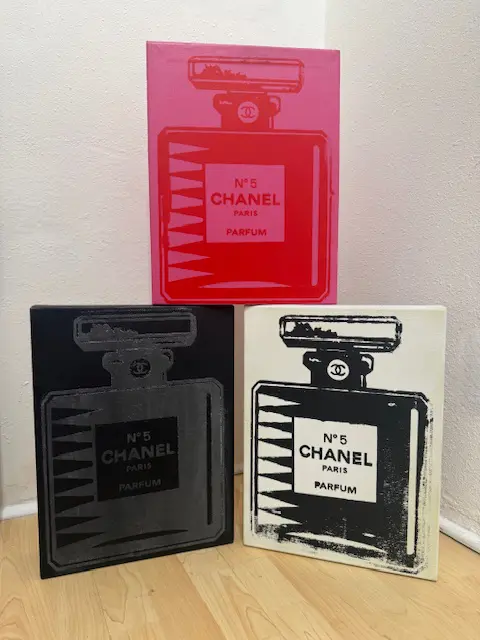
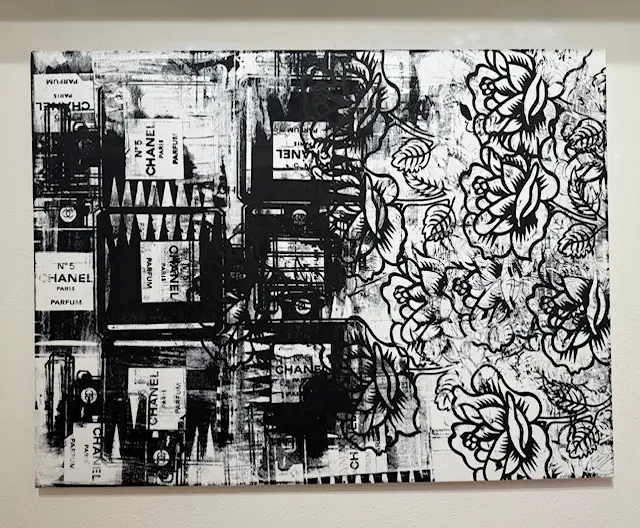
Channel No. 5 by Burton Morris
From Icon to Icon in Bloom
Traditional Pop Art flattened imagery into graphic immediacy. It prioritized clarity and boldness. In Icons in Bloom, Morris expands the language. The floral repetition introduces rhythm and softness. The compositions feel immersive rather than confrontational. The imagery remains accessible, yet it carries a more layered emotional register.
Historically, Pop Art democratized imagery by elevating everyday symbols into fine art. Morris now performs a secondary elevation. He transforms familiar visual language into works that are deeply attuned to design culture and contemporary collecting practices. The paintings acknowledge luxury without irony. They recognize that art today exists within environments shaped by architecture and curated lifestyle.
This development reflects the broader evolution of Contemporary Pop Art. The genre has moved from outsider critique to integrated cultural presence. It no longer stands at a distance from spectacle. It exists within it.
Reclaiming Painting in an Algorithmic Era
The rise of artificial intelligence and digital production has reignited questions about authorship. When algorithms can produce endless variations of imagery, the value of hand executed work becomes more pronounced. Morris’ emphasis on surface and finish asserts the continued relevance of painting as a medium.
The bold outlines that define his style remain intact, yet there is an increased sensitivity in the handling of color and composition. The paintings feel deliberate. They carry the weight of touch. In a world of infinite digital replication, that physicality becomes meaningful.
Pop Art once challenged the hierarchy between high and low culture. Today the hierarchy has already collapsed. The challenge now is to create work that carries presence in a flattened visual economy. Morris’ new body of work addresses that challenge directly.
Parfum des Roses by Burton Morris
Reframing Pop Art for a Reinvented Los Angeles
This exhibition represents more than a presentation of new paintings. It represents a repositioning of Pop Art within contemporary discourse. It asks whether the genre can evolve beyond repetition of its historical canon. It suggests that maturity rather than rebellion defines its current phase.
Los Angeles is the ideal setting for this conversation. The city thrives on reinvention. It merges entertainment, design, and institutional credibility in a way that few cities can. In this environment, Pop Art finds renewed relevance not as satire but as celebration. It reflects how deeply image culture shapes identity.
Burton Morris’ return to Los Angeles matters because it mirrors the city’s own trajectory. Both have moved from bold assertion to refined complexity. Both understand spectacle, yet both now operate with greater awareness.
Contemporary Pop Art in 2026
The evolution of Contemporary Pop Art requires artists to respond to a world that is visually saturated and technologically accelerated. The language must deepen. The surface must matter. Emotional resonance must coexist with graphic clarity.
Icons in Bloom demonstrates that Pop Art is not static. It can mature. It can integrate romance and refinement without losing its bold identity. Morris’ work acknowledges that art and commerce are intertwined, yet it approaches that reality with sophistication rather than critique.
For collectors, this moment offers the opportunity to engage with Pop Art at a pivotal stage of its evolution. For cultural thinkers, it offers evidence that the genre remains relevant when it adapts to its environment.
Burton Morris’ return to Los Angeles signals that Contemporary Pop Art has entered a new chapter. It is no longer defined by distance from culture. It is defined by participation within it. In a city built on image, ambition, and reinvention, that participation feels immediate and essential.
Pop Art has not faded. It has matured. And in Los Angeles in 2026, that maturity carries weight.
Stay up to date with our latest news, events, and exhibitions!
We will process the personal data you have supplied to communicate with you in accordance with our Privacy Policy. You can unsubscribe or change your preferences at any time by clicking the link in our emails.
Inquire about the artwork
Please fill out the form and we will check the availability of the artwork for you